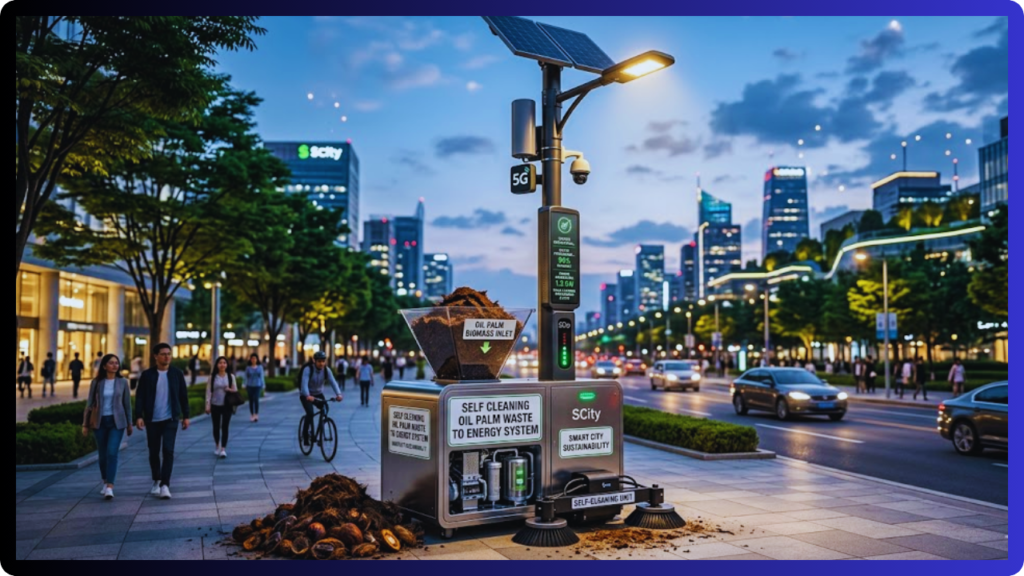

The concept of self cleaning streetlight oil palm waste is emerging as a powerful solution for sustainable and low-maintenance public lighting. It combines renewable energy generated from agricultural waste with smart cleaning systems to maintain efficiency. In many regions where oil palm production is high, waste materials are often underutilized. This technology transforms that waste into a valuable energy source for street lighting. At the same time, the self-cleaning mechanism ensures that dust and environmental particles do not reduce lighting performance. As cities and rural areas move toward greener infrastructure, this solution is becoming increasingly relevant. It also supports energy independence by reducing reliance on traditional grids. The system promotes efficient utilization of agricultural by-products that are otherwise discarded or burned. It helps reduce environmental pollution caused by improper biomass disposal practices. It aligns with global clean energy goals and smart city development strategies. Overall, it represents a modern step toward sustainable infrastructure innovation with long-term environmental and economic benefits. It also contributes to reducing carbon emissions in developing regions.
Who is Self Cleaning Streetlight Oil Palm Waste For
The self cleaning streetlight oil palm waste system is designed for governments, municipalities, and infrastructure planners who are focused on building sustainable and energy-efficient smart cities. It is also highly relevant for rural development authorities working to improve electrification in remote areas using local agricultural resources. Environmental organizations and renewable energy developers can also benefit from this system due to its eco-friendly design and waste-to-energy approach. Additionally, industrial zones, highway authorities, and smart city projects can implement this technology to reduce maintenance costs and improve lighting efficiency. Overall, it is a solution for any sector aiming to combine sustainability, automation, and long-term cost savings in public lighting systems. It is also suitable for private infrastructure developers investing in green energy projects. Educational and research institutions can use it for innovation and testing purposes. Energy companies can adopt it to expand renewable power solutions in public lighting networks.
Energy Production from Oil Palm Waste
Biomass and Biofuel Conversion
Oil palm waste can be converted into biomass energy or biofuel through controlled processing methods. This process generates electricity that can be stored and used to power streetlights during nighttime hours. It helps reduce agricultural waste while providing a reliable renewable energy source. The use of such waste materials lowers dependence on fossil fuels and supports environmental sustainability. In regions with abundant palm production, this approach offers a consistent and practical energy solution. The integration of this energy into the self cleaning streetlight oil palm waste system enhances its overall effectiveness and long-term efficiency. It also supports circular economy principles by reusing agricultural residues instead of discarding them. This reduces environmental pollution significantly and improves waste management practices. Energy generation becomes more localized, efficient, and sustainable for long-term infrastructure use. It also helps reduce greenhouse gas emissions from traditional energy sources. In addition, it promotes rural industrial development and green job creation.
Self Cleaning Technology in Streetlights
Automated Cleaning Mechanism
The cleaning system in a self cleaning streetlight oil palm waste setup is designed to remove dust and debris automatically without human intervention. It typically uses motorized brushes, wipers, or controlled air and water systems to maintain clean lighting surfaces. Outdoor lighting systems are continuously exposed to environmental conditions such as dust, pollution, and weather changes that reduce efficiency over time. The automated cleaning mechanism ensures consistent brightness and stable lighting performance throughout its operation. This reduces the need for frequent manual maintenance and significantly extends the lifespan of lighting components. As a result, the system becomes more reliable, durable, and cost-efficient in the long run. It also improves energy efficiency by ensuring maximum light output from clean surfaces. The system operates on programmed intervals or sensor-based triggers depending on environmental conditions. It reduces operational downtime and maintenance interruptions significantly. It also ensures stable lighting performance in highly polluted or dusty environments. This makes it highly suitable for highways, industrial zones, and urban roads.
Benefits of Self Cleaning Streetlight Oil Palm Waste
Efficiency and Sustainability Advantages
The self cleaning streetlight oil palm waste system provides multiple advantages by combining renewable energy generation with smart maintenance technology. It improves lighting efficiency by keeping all components clean and fully functional at all times. The use of oil palm waste reduces environmental impact by recycling agricultural by-products that would otherwise be discarded. This system also significantly lowers long-term operational costs by minimizing maintenance requirements and labor dependency. It supports sustainable development goals and smart city infrastructure initiatives across different regions. These combined benefits make it a highly effective solution for modern urban and rural lighting systems. It enhances energy conservation in public lighting networks and reduces unnecessary power losses. It also improves infrastructure reliability under different environmental conditions. The system supports eco-friendly development and reduces carbon emissions. It ensures long-term operational stability and consistent performance in all weather conditions. It also contributes to sustainable resource management practices.
Working Principle of Self Cleaning Streetlight Oil Palm Waste
Integrated Energy and Cleaning Process
The self cleaning streetlight oil palm waste system operates through a combined process of energy generation and automated cleaning cycles. Oil palm waste is first converted into usable energy through biomass or biofuel processing methods, and this energy is stored in batteries for continuous lighting operation. At the same time, a programmed cleaning mechanism is activated at scheduled intervals or triggered by environmental sensors. This ensures that dust, dirt, and pollutants are regularly removed from lighting surfaces and sensitive components. The integration of these two systems allows smooth operation without manual intervention. It creates a balanced mechanism between energy production and maintenance automation. The system ensures uninterrupted lighting performance even in challenging environments. It improves overall system stability and reduces the need for human supervision. It also decreases maintenance workload significantly over time. The system enhances operational efficiency and supports long-term sustainability. It also increases overall infrastructure reliability.
Role in Smart City Development
Sustainable Urban Infrastructure
The self cleaning streetlight oil palm waste technology plays a significant role in modern smart city development by supporting sustainable and energy-efficient infrastructure systems. It helps cities reduce energy consumption by using renewable resources derived from agricultural waste. The automated cleaning feature reduces maintenance requirements and operational costs for municipal authorities. The system can also be integrated with smart grids, IoT sensors, and digital monitoring platforms for better control and management. This enhances urban sustainability and improves the quality and reliability of public lighting systems. As cities continue to expand, such technologies become essential for long-term environmental planning and infrastructure efficiency. It improves urban energy distribution and reduces wastage. It enhances public safety through consistent lighting performance. It supports digital transformation in infrastructure management. It also reduces greenhouse gas emissions in densely populated areas. Furthermore, it contributes to the development of intelligent and sustainable cities.
Environmental Impact and Waste Reduction
Eco-Friendly Energy Utilization
The self cleaning streetlight oil palm waste system contributes significantly to environmental protection by converting agricultural waste into usable energy. This reduces landfill waste and minimizes environmental pollution caused by improper waste disposal practices. The use of renewable energy reduces greenhouse gas emissions and supports global climate change mitigation efforts. It also promotes responsible resource management in oil palm producing regions. By converting waste into a valuable energy source, this technology supports a circular economy model. Its environmental benefits make it a sustainable and eco-friendly choice for future infrastructure development. It reduces open burning of agricultural waste. It improves air quality in both rural and urban areas. It supports global environmental sustainability goals. It also helps reduce soil and water contamination caused by waste accumulation. In addition, it encourages greener industrial practices and cleaner production systems.
Maintenance and Long-Term Performance
Reduced Operational Effort
The self cleaning streetlight oil palm waste system is designed to significantly reduce maintenance requirements through automation and smart technology. The self-cleaning feature ensures that lighting components remain in optimal condition for extended periods without manual cleaning. This reduces the need for frequent inspections, repairs, and maintenance activities. Over time, it leads to substantial cost savings and improved system reliability. The durability of the system makes it suitable for both urban infrastructure and remote rural areas. It ensures uninterrupted lighting performance under different environmental conditions. It reduces human labor requirements and improves operational efficiency. It also enhances the overall lifespan of system components. The system minimizes unexpected breakdowns and maintenance emergencies. It ensures stable and consistent long-term performance in all conditions.
Cost Efficiency of Self Cleaning Streetlight Oil Palm Waste
The system reduces long-term operational costs through energy efficiency and automation. Renewable energy minimizes electricity expenses over time. Automated cleaning reduces labor costs and maintenance frequency. Although initial investment may be higher, long-term savings make it economically viable. It also reduces replacement costs due to improved durability. This makes it suitable for large infrastructure projects. It ensures financial stability over time. The system helps optimize municipal budgets effectively. It reduces dependency on conventional grid electricity. It provides stable cost performance over many years. This enhances return on investment for infrastructure projects. It is a cost-effective and sustainable smart lighting solution. It also reduces unexpected maintenance expenses and improves financial planning efficiency.
Durability and Weather Resistance
The system is built to withstand extreme environmental conditions and continuous outdoor exposure. It operates efficiently in heat, dust, humidity, and varying weather conditions. The cleaning system prevents performance loss caused by dust and environmental buildup. Weather-resistant materials ensure long-term durability and structural stability. It performs well during storms, heavy rain, and extreme weather events. Structural strength reduces environmental damage and mechanical stress. Protective coatings extend the lifespan of components significantly. It remains stable in all types of climates and regions. It supports continuous outdoor operation without interruption. It reduces maintenance needs and improves reliability. It ensures consistent performance throughout the year. It also resists corrosion, UV damage, and environmental wear. It maintains efficiency even in highly polluted urban areas. It is designed for long-term durability and low degradation over time.
Integration with Renewable Energy Systems
The system can be combined with solar and other renewable energy sources for hybrid power generation. This hybrid model increases energy reliability and system efficiency. It ensures continuous operation even during low energy production periods. It reduces dependency on fossil fuels and centralized power systems. It improves energy flexibility and adaptability in different environments. It supports sustainable energy planning and infrastructure development. It enhances system resilience against power failures. It improves energy stability in remote and off-grid areas. It supports clean energy transition goals. It increases overall energy efficiency in public lighting systems. It ensures uninterrupted street lighting performance. It strengthens renewable energy adoption globally. It also improves decentralized energy generation systems. It enhances backup power reliability and load balancing efficiency.
Technological Innovations in Cleaning Systems
Modern sensors improve cleaning accuracy and system efficiency. Automation reduces unnecessary cleaning cycles and energy consumption. Smart controls optimize system performance based on environmental conditions. Artificial intelligence improves maintenance prediction and system reliability. It reduces energy waste and operational inefficiencies. It increases system lifespan and durability. It enhances precision in cleaning operations. It improves performance under varying environmental conditions. It supports intelligent infrastructure systems. It ensures adaptive cleaning response based on real-time data. It reduces mechanical wear and tear. It improves overall system efficiency and responsiveness. It also enables real-time system adjustments for optimal performance. It enhances dust detection and removal accuracy. It reduces system failures and maintenance costs.
Energy Storage and Battery Efficiency
Efficient batteries store biomass-generated energy for continuous use. They ensure uninterrupted lighting during nighttime hours. Improved storage technology increases system reliability and performance. Fast charging capabilities improve energy availability. Reduced energy loss enhances overall system efficiency. Batteries support long-term continuous operation. They stabilize energy supply and distribution. They improve system consistency and reliability. They reduce power interruptions significantly. They enhance performance under varying conditions. They support uninterrupted lighting systems effectively. They ensure stable energy output at all times. They also support backup energy during emergencies. Battery lifespan is optimized through smart charging systems. Thermal management improves operational stability and safety.
Rural Development and Accessibility
The system improves rural electrification by providing reliable lighting in remote areas. It uses locally available oil palm waste, making it cost-effective and sustainable. It supports community safety and development in underserved regions. It enhances economic activities during nighttime hours. It improves overall quality of life in rural communities. It reduces energy poverty and infrastructure gaps. It supports local empowerment and resource utilization. It increases access to essential infrastructure services. It reduces dependency on external power supply systems. It promotes long-term sustainable rural development. It strengthens community infrastructure and growth. It also supports rural education and healthcare access at night. It improves safety and mobility in remote villages. It encourages small business growth and local economic activity.
Smart Monitoring and Control Systems
Remote monitoring improves system efficiency and control. Real-time data enhances performance tracking and analysis. Predictive maintenance reduces system failures and downtime. Smart controls improve automation and energy management. It increases overall system reliability and stability. It enables quick detection of faults and issues. It improves energy optimization and resource usage. It supports centralized monitoring systems. It reduces operational downtime significantly. It enhances decision-making and planning processes. It improves maintenance scheduling and efficiency. It increases system intelligence and responsiveness. It also supports cloud-based monitoring systems. It improves transparency in system performance. It enhances response time for maintenance operations.
Scalability of Self Cleaning Streetlight Oil Palm Waste
The system supports both small-scale and large-scale infrastructure projects. Modular design allows easy expansion based on requirements. It supports urban, rural, and industrial deployment. It adapts easily to different environmental conditions. It supports phased implementation strategies. It allows flexible infrastructure planning and development. It expands without requiring major system redesign. It supports global applications and deployment. It improves infrastructure scalability and adaptability. It ensures long-term system flexibility. It supports growing urban populations and cities. It enhances deployment efficiency and speed. It also integrates easily into existing infrastructure systems. It reduces expansion complexity and costs. It supports large national lighting projects. It allows customized regional adaptation.
Government Support and Policy Impact
Government policies strongly support renewable energy adoption. Incentives reduce overall implementation and setup costs. Regulations encourage sustainable infrastructure systems. Funding supports large-scale development projects. Policies promote green and clean technology adoption. It attracts public and private sector investment. It supports environmental protection goals. It increases adoption of renewable systems. It strengthens energy transition efforts globally. It supports public-private partnerships. It improves infrastructure funding availability. It promotes sustainable national development. It also encourages research and innovation in renewable energy. Tax benefits improve project feasibility. International cooperation supports global expansion.
Future Market Potential
Demand for sustainable energy systems is increasing globally. Technological innovation continues to improve efficiency and performance. Market expansion is growing across multiple regions. Environmental awareness is driving adoption worldwide. Investment opportunities in this sector are rising. It supports green economy development. It improves commercial viability of renewable systems. It expands renewable energy markets globally. It attracts international interest and funding. It reduces production and operational costs over time. It supports innovation ecosystems and startups. It has strong long-term growth potential. It also opens new industrial and technological sectors. Private sector investment continues to increase rapidly. Global sustainability targets further boost demand. Smart infrastructure markets are expanding significantly. Future urban planning will increasingly rely on such systems. Continuous innovation ensures strong future relevance and scalability.
FAQs
What is self cleaning streetlight oil palm waste?
It is a smart lighting system that uses oil palm waste energy with automated cleaning technology.
How does it generate electricity?
It converts oil palm residues into biomass or biofuel for power generation.
Why is the self-cleaning system important?
It maintains clean lighting surfaces and ensures consistent performance.
Can it be used in rural areas?
Yes, it is highly effective for rural and remote regions with limited electricity access.
Does it reduce maintenance cost?
Yes, it significantly reduces maintenance effort and long-term operational expenses.
- You May Like this:Droven IO AI Automation in USA Trends Uses and Benefits
Final Thought
The self cleaning streetlight oil palm waste system represents a major advancement in sustainable infrastructure by combining renewable energy with intelligent automation. It effectively transforms agricultural waste into a valuable energy source while ensuring consistent lighting performance through self-cleaning technology. This makes it highly efficient, environmentally friendly, and cost-effective for modern urban and rural development. Its ability to reduce maintenance needs, lower energy costs, and improve durability makes it a practical long-term solution for governments and infrastructure planners. As the demand for green and smart cities continues to grow, this technology offers a scalable and future-ready approach to public lighting systems. It also supports long-term environmental protection by reducing waste pollution. The system helps improve energy independence in developing regions. It contributes to lowering carbon emissions on a large scale. Its smart design ensures reliable performance in all weather conditions. Overall, it stands as a strong innovation for sustainable global infrastructure development.