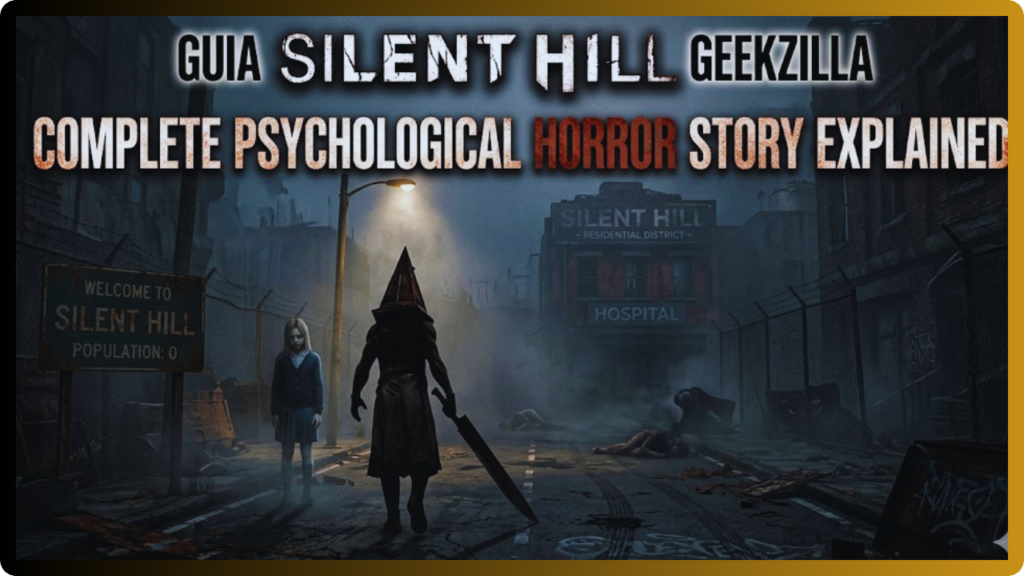

The guia silent hill geekzilla is a complete breakdown of the Silent Hill franchise, focusing on its psychological horror design, emotional storytelling, and symbolic depth. It helps players understand how the series builds fear through atmosphere, trauma, and mental instability instead of simple action-based gameplay. Silent Hill is widely recognized as one of the most influential horror franchises in gaming history due to its deep narrative and disturbing psychological themes. The guia silent hill geekzilla is designed to simplify this complex universe for both new and experienced players. It explains why the series continues to remain relevant even decades after its release. The franchise builds fear through psychological pressure rather than traditional horror tricks. Every environment is designed to reflect emotional breakdown and mental conflict. Players often feel disconnected from reality while progressing through the story. The fog and silence are not just visuals but emotional tools. This makes Silent Hill a deeply immersive psychological experience.
Who Is Silent Hill For and What Makes It Unique
The guia silent hill geekzilla explains that Silent Hill is designed for players who prefer deep storytelling and emotional horror over fast-paced combat. The series focuses on psychological tension, symbolic storytelling, and interpretation rather than direct action. Every element in the game is carefully designed to reflect inner fears, guilt, and trauma. Players experience fear not just from enemies but from understanding the meaning behind events. This makes the experience highly personal and unique for every player. The game rewards observation and emotional awareness instead of reflex-based gameplay. Each playthrough can feel different depending on interpretation. The story often leaves questions unanswered on purpose. This ambiguity strengthens its psychological impact. Silent Hill becomes more of an emotional journey than a traditional game. It also pushes players to question their perception of reality. The emotional weight increases as the story progresses deeper. This design creates long-lasting psychological impact even after finishing the game.
Gameplay and Survival Mechanics
Exploration and Limited Resources System
The guia silent hill geekzilla highlights that gameplay is built around survival tension, exploration, and uncertainty. Players often face limited resources, confusing environments, and unpredictable encounters that increase stress and fear. The game avoids over-guiding the player, which forces independent thinking and careful exploration. This design increases immersion and emotional involvement throughout the experience. The slow pacing strengthens psychological impact and keeps players constantly alert. Every item found feels meaningful and important for survival. Combat is intentionally clunky to increase vulnerability. This design choice enhances tension during encounters. Exploration is often rewarded with hidden story details. The environment itself becomes part of the challenge. The uncertainty of what comes next builds constant anxiety. Sound and silence are used as psychological tools. Every corridor feels like a potential threat or revelation. Resource scarcity forces players to think strategically. Even safe moments feel temporary and fragile.
Story Structure and Narrative Depth
Emotional Storytelling Approach
The guia silent hill geekzilla explains that Silent Hill uses layered storytelling instead of straightforward narrative progression. Players uncover the story through exploration, environmental clues, and hidden symbolism. Each character’s journey reflects personal trauma, emotional conflict, and psychological struggle. The town itself reacts to the mental state of the characters, shaping the world around them. This approach creates a deeply emotional and interpretative experience. Story details are often hidden in documents and environmental design. Players must piece together meaning through observation. This creates a sense of discovery and mystery. The narrative often changes based on perspective. Emotional interpretation becomes more important than literal explanation. The story encourages multiple interpretations from different players. Nothing is fully explained, increasing replay value. Every detail adds depth to the psychological meaning. The story feels fragmented yet deeply connected. Understanding it requires emotional analysis rather than logic alone.
Psychological Meaning and Symbolism
Monsters as Emotional Representations
The guia silent hill geekzilla emphasizes that monsters in Silent Hill are symbolic manifestations of fear, guilt, and mental distress. Each creature represents a hidden emotional conflict within the protagonist’s mind. Environments also shift based on psychological pressure, blurring the line between reality and illusion. This makes the world feel alive and emotionally reactive. Understanding these symbols is essential for fully appreciating the story. Every monster design has hidden meaning connected to trauma. The town reflects subconscious thoughts in physical form. Fear becomes personalized for each character. Nothing in Silent Hill is random or without purpose. Even silence carries emotional weight. The designs often reflect repressed memories. Psychological interpretation is key to understanding encounters. The horror becomes intellectual as well as emotional. Each enemy feels like a metaphor rather than a creature. The experience becomes a psychological study of human fear.
Cultural Impact and Legacy
Influence on Modern Horror Games
The guia silent hill geekzilla explains that Silent Hill has had a major impact on modern horror game design. Many developers have adopted its psychological storytelling style and atmospheric tension. The franchise introduced a new way of creating fear through emotional depth rather than action. Its influence can be seen in countless modern survival horror games. Silent Hill remains a benchmark for psychological horror in gaming history. It changed how developers design fear-based experiences. The focus on mood over mechanics became widely adopted. Many modern horror titles follow its design philosophy. Its legacy continues to grow with new generations of players. Silent Hill set a standard that is still respected today. It redefined emotional storytelling in interactive media. Developers still study its atmospheric design techniques. Its influence extends into films and modern narrative design. The franchise shaped the foundation of psychological horror.
Why Silent Hill Still Matters Today
Timeless Psychological Horror Design
The guia silent hill geekzilla highlights that Silent Hill remains relevant because its themes are based on universal human emotions. Fear, guilt, loss, and trauma are timeless concepts that continue to resonate with players. The game’s psychological design ensures that each experience feels meaningful and reflective. Even modern audiences find its storytelling powerful and emotionally disturbing. This timeless quality keeps the franchise alive in gaming culture. The emotional themes never become outdated. Players still relate to its psychological struggles. The design focuses on human emotion rather than technology. This ensures long-term relevance. Silent Hill remains emotionally powerful across generations. It also continues to influence modern horror game design. Its emotional storytelling still feels ahead of its time. The psychological depth makes it unforgettable for new players. Its themes remain universally understood and relatable. This is why it continues to matter today.
Player Experience and Emotional Impact
Immersion Through Fear and Isolation
The guia silent hill geekzilla explains that immersion in Silent Hill comes from its ability to create emotional isolation. The atmosphere builds constant tension and uncertainty throughout gameplay. Players feel disconnected from reality as they explore the distorted world. This emotional design enhances psychological engagement and fear. It remains one of the strongest elements of the franchise. Sound design plays a major role in immersion. Silence is used as a tool for tension. Visual distortion increases discomfort. Players often feel mentally exhausted during gameplay. This emotional pressure defines the experience. The feeling of loneliness becomes a constant companion throughout the journey. Every step forward increases psychological pressure. The game forces players to sit with their fear instead of escaping it. Even safe areas feel temporary and unstable. This deep isolation defines the Silent Hill experience.
Future of Silent Hill and Upcoming Expectations
New Era of Psychological Horror Revival
The guia silent hill geekzilla also explores the future of the franchise, which is currently experiencing a major revival. New remakes and projects aim to modernize the series while preserving its psychological depth and emotional storytelling. Fans expect improved visuals and gameplay while maintaining the original horror philosophy. The focus is still expected to remain on atmosphere and psychological fear rather than action-heavy mechanics. This new era could bring Silent Hill back as a leading force in horror gaming. Developers aim to balance nostalgia with innovation. Modern technology enhances immersion and realism. However, the core psychological themes remain unchanged. The franchise is expected to reach new audiences. Its legacy continues to expand globally. The revival introduces Silent Hill to a new generation of players. Emotional storytelling remains the central focus. The series continues evolving while preserving its identity.
Silent Hill Atmosphere and Environmental Design
The Silent Hill world is defined by fog, darkness, and decay that create constant psychological pressure. Every location feels abandoned yet emotionally alive. The environment shifts between reality and nightmare states without warning. This design makes exploration unpredictable and unsettling. The shifting atmosphere keeps players in a constant state of uncertainty. Even familiar areas feel unfamiliar and distorted over time. Lighting and fog work together to limit visibility and increase fear. The world feels like it is reacting to the player’s mental state. This environmental design strengthens psychological immersion. The sense of isolation becomes deeper as the player progresses. Every corner feels like it hides something unknown. The environment creates emotional discomfort without direct threats. Visual decay reinforces the feeling of hopelessness. The world itself becomes a living reflection of fear.
Sound Design and Audio Psychology
Sound is one of the most powerful tools in Silent Hill’s horror design. Static noise, distant footsteps, and silence build constant anxiety. The audio design manipulates fear even when nothing is visible. This creates deep psychological tension. Every sound feels intentional and threatening. Sudden audio shifts increase player alertness and stress. Silence is used as effectively as loud noise to build fear. The soundtrack often reflects emotional instability. Sound becomes a warning system that never feels safe. Audio cues often mislead the player’s expectations. Background noise increases paranoia and tension. Music is used sparingly to maintain discomfort. The unpredictability of sound heightens emotional pressure. Every audio element contributes to psychological fear. The layering of ambient sounds creates constant unease. Even distant audio signals can feel like danger approaching. The absence of sound is equally disturbing and meaningful.
Character Psychology and Inner Trauma
Characters in Silent Hill are shaped by emotional trauma and guilt. Their mental state directly influences the world around them. This makes each story deeply personal and symbolic. The narrative reflects internal psychological struggles. Each character represents a different form of emotional pain. Their actions are often driven by suppressed memories. Psychological breakdowns shape how they perceive reality. The game reveals trauma gradually through storytelling. This makes character development complex and meaningful. Their fears manifest physically in the world. Emotional conflict drives every decision they make. The story explores guilt, regret, and repression. Characters often face distorted versions of themselves. This deep psychological focus adds emotional weight. Their perception of reality becomes unreliable. Internal conflict is visualized through external horrors. Each character’s journey becomes a reflection of the human psyche.
Symbolism in Environmental Storytelling
Every room, hallway, and street carries symbolic meaning. Environments represent emotional states rather than physical reality. This creates layers of interpretation for players. The world itself acts as a psychological map. Objects often represent hidden memories or fears. Visual design communicates emotion without dialogue. The environment changes based on narrative progression. Symbolism is embedded in every detail. This encourages deeper analysis of each location. Even small objects hold hidden meaning. Corrupted spaces reflect mental instability. Environmental storytelling replaces traditional exposition. The world itself becomes a narrative language. Everything is designed to be interpreted emotionally. Colors, textures, and decay patterns all carry meaning. The environment speaks through visual metaphor. Exploration becomes an act of psychological decoding.
Horror Philosophy Behind the Franchise
Silent Hill focuses on internal fear instead of external threats. The horror comes from emotion, memory, and mental distortion. This philosophy separates it from traditional horror games. Fear is created through interpretation. The game prioritizes psychological discomfort over action. It avoids predictable horror patterns. Emotional tension replaces jump scares as the main tool. The player’s mind becomes the primary source of fear. This makes the horror deeply personal and lasting. Fear evolves based on player perception. The game challenges psychological stability. Horror is built through suggestion, not exposure. The experience becomes introspective and emotional. This philosophy defines the entire franchise. Fear is designed to be subjective and personal. The game weaponizes imagination instead of monsters. Psychological horror becomes more important than visual horror.
Replay Value and Multiple Interpretations
Each playthrough of Silent Hill can reveal different meanings. Players interpret events in unique ways based on perspective. This increases replay value and discussion. The ambiguity is intentional. Hidden details become clearer after multiple playthroughs. Different players notice different symbolic elements. Story interpretation changes with experience and attention. This keeps the game engaging over time. The narrative remains open-ended and flexible. New insights emerge with each replay. Emotional understanding deepens over time. No single interpretation is fully correct. The story encourages ongoing analysis. This keeps the experience alive beyond completion. Player discussions often reveal new theories. Each revisit adds psychological depth. The game rewards curiosity and observation.
Visual Distortion and Dual Reality System
The transition between normal and nightmare worlds is a core design feature. Visual distortion reflects psychological instability. This creates constant uncertainty. The world never feels stable or safe. Lighting and texture shifts enhance emotional discomfort. Environments become increasingly corrupted over time. Reality and illusion blur together completely. This dual-world system reinforces psychological horror. Players can never fully trust what they see. The environment becomes increasingly unstable. Visual changes reflect emotional breakdown. The distortion increases fear and confusion. This system keeps tension consistently high. It strengthens immersion through unpredictability. The shift between worlds feels abrupt and disturbing. Each transition reinforces emotional instability. The player is constantly forced to question reality.
Player Psychology and Emotional Response
The game is designed to manipulate emotional reactions. It creates stress, confusion, and fear through atmosphere. Players become part of the psychological experience. The emotional impact lasts beyond gameplay. Anxiety builds gradually through environmental design. The player’s imagination amplifies fear. Constant tension keeps the mind alert. Emotional exhaustion becomes part of the experience. This psychological engagement defines Silent Hill. Fear is self-generated through perception. The game plays on uncertainty and doubt. Emotional responses vary per player. This makes the experience deeply personal. The mind becomes the main battleground. Anticipation becomes more frightening than events. The game studies player reaction through design. Emotional pressure is maintained throughout gameplay.
Legacy in Pop Culture and Media Influence
Silent Hill has influenced movies, books, and modern storytelling. Its psychological horror style is widely recognized. Many creators reference its design philosophy. It remains culturally significant. The franchise shaped modern horror aesthetics. Its themes appear in various media forms. Visual and narrative style inspired many creators. It became a symbol of psychological horror innovation. Its legacy continues to expand globally. It redefined horror storytelling standards. Its influence is visible in modern films and games. Many creators study its atmospheric techniques. The franchise remains a creative benchmark. Its cultural impact continues to grow. It established a new language for horror storytelling. Its influence extends beyond gaming into mainstream media. Silent Hill continues to inspire creative industries worldwide.
Emotional Aftereffect of Silent Hill Experience
The experience of Silent Hill continues even after finishing the game. Players reflect on its meaning and symbolism. The emotional impact stays with them long-term. This makes it a lasting psychological experience. Many players revisit the story mentally after playing. The themes continue to affect interpretation over time. Emotional confusion often lingers after completion. The game creates deep psychological memory. This lasting impact defines its legacy. The experience often triggers deep reflection. Players reconsider events long after gameplay ends. Emotional traces remain embedded in memory. The psychological effect can feel permanent. This is what makes Silent Hill unforgettable. The game continues to influence thoughts and emotions. Its impact resurfaces even years later. The experience becomes part of the player’s memory.
FAQs
What is Silent Hill about?
The guia silent hill geekzilla explains that Silent Hill is about psychological horror, trauma, and emotional storytelling within a mysterious town.
Why is Silent Hill considered psychological horror?
The guia silent hill geekzilla shows that it focuses on mental fear, symbolism, and emotional interpretation rather than physical threats.
Do I need to play Silent Hill in order?
The guia silent hill geekzilla recommends playing in order to better understand character development and story evolution.
What makes Silent Hill different from other horror games?
The guia silent hill geekzilla highlights its focus on emotional depth, symbolism, and psychological storytelling instead of action gameplay.
Is Silent Hill still relevant today?
The guia silent hill geekzilla confirms that it remains relevant due to its timeless psychological themes and strong storytelling design.
- You May Like this:Connectivity HSSGamepad Complete Guide Setup Issues Performance Tips
Final Thoughts
The guia silent hill geekzilla demonstrates that Silent Hill is more than just a horror game series; it is a psychological exploration of fear, emotion, and human trauma. Its storytelling approach, symbolic design, and immersive atmosphere continue to influence the gaming industry. The franchise remains one of the most powerful examples of psychological horror ever created. Silent Hill proves that real fear comes not from what is seen, but from what is understood within the human mind. The emotional depth of the series continues to inspire modern horror design. Its legacy grows stronger with each new interpretation. Players still discover hidden meanings in every playthrough. The psychological impact remains unforgettable. Silent Hill stands as a timeless masterpiece of horror storytelling. It continues to shape how horror games are made today. Its influence remains unmatched in the genre. The emotional journey never truly ends. It stays with players long after the game is over. This is why Silent Hill remains a legendary experience in gaming history.